
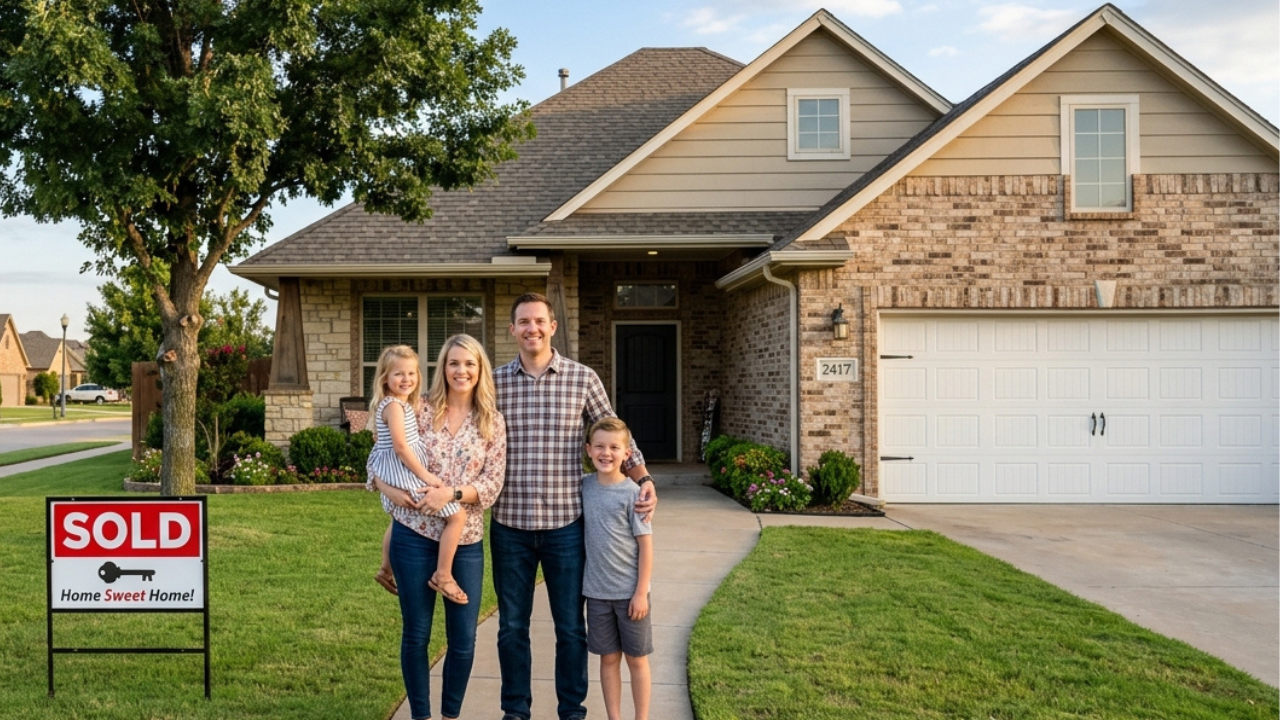
Tulsa vs. Oklahoma City: Which Oklahoma Metro Gives Families More for Their Money?
- → Why Oklahoma is getting attention
- → The short answer
- 01 Housing and monthly payment comparison
- 02 Jobs and income potential
- 03 Family life, schools, and suburbs
- 04 Traffic and daily convenience
- 05 Taxes and cost of living
- 06 Best suburbs to compare
- → Tulsa vs OKC scorecard
- → PaycheckCities verdict
Oklahoma has become one of the more interesting states for families who are tired of inflated housing markets. While buyers in many parts of the country are trying to make $400,000 starter homes work, Tulsa and Oklahoma City still offer real houses, family neighborhoods, and metro-level job access at prices that look unusually reasonable.
But if you are choosing between Tulsa and Oklahoma City, the answer is not as simple as picking the cheaper city. Tulsa often feels easier, calmer, and more affordable in day-to-day life. Oklahoma City offers a larger economy, more growth, more amenities, and more long-term upside.
For Paycheck Cities readers, the real question is this: which Oklahoma metro gives families the strongest combination of home price, monthly payment, job access, schools, commute, and lifestyle?
01. Housing and monthly payment comparison
Housing is where the Tulsa vs Oklahoma City comparison gets interesting. Redfin’s recent market snapshot shows Tulsa with a median sale price around $239,876, while Oklahoma City is closer to $267,607. That gives Tulsa the clearer advantage if you are judging strictly by recent sale prices.
| Housing metric | Tulsa | Oklahoma City | Edge |
|---|---|---|---|
| Redfin median sale price | About $240,000 | About $268,000 | Tulsa |
| Estimated payment on median sale price | About $1,675/mo | About $1,855/mo | Tulsa |
| Buyer feel | More house-for-payment in many neighborhoods | More inventory and more metro variety | Depends on suburb |
Using a 10% down payment, a 6.8% mortgage rate, estimated taxes, and homeowners insurance, the payment difference between a $240,000 home and a $268,000 home can be around $175 to $200 per month. That may not sound dramatic, but over a full year, that is real money for groceries, childcare, savings, car repairs, or debt payoff.
02. Jobs and income potential
Oklahoma City has the stronger overall economy. It is the state capital, the largest city in Oklahoma, and a major employment hub for government, aerospace, healthcare, energy, logistics, education, and professional services.
Tulsa still has a real job market. It has deep roots in energy, aviation, manufacturing, healthcare, finance, and professional services. The difference is scale. Oklahoma City gives families more employer variety, more state and government-related employment, and a broader long-term growth story.
| Job category | Tulsa | Oklahoma City | Edge |
|---|---|---|---|
| Healthcare | Strong regional market | Large metro medical market | OKC slight edge |
| Energy | Historic strength | Major state energy hub | Tie |
| Aerospace | Strong aviation presence | Major aerospace and defense presence | OKC |
| Government jobs | Limited compared to capital | State capital advantage | OKC |
| Affordability relative to income | Strong | Strong, but growth pushes prices | Tulsa |
If your household income is remote, healthcare-based, education-based, or tied to a stable local employer, Tulsa may stretch your paycheck further. If your career needs a larger job market with more options, Oklahoma City is usually the safer long-term bet.
03. Family life, schools, and suburbs
Both metros have strong family suburbs, which is why this comparison is not one-sided. Tulsa’s strongest family areas often include Broken Arrow, Bixby, Jenks, Owasso, and Sand Springs. Oklahoma City’s strongest family areas often include Edmond, Yukon, Moore, Norman, Mustang, and Deer Creek-area neighborhoods.
Tulsa tends to feel more compact and easier to navigate. Families who want a slower pace, shorter drives, attractive neighborhoods, and a more manageable metro may prefer Tulsa. Oklahoma City tends to offer more choices, more entertainment, more newer-growth suburbs, and a larger job-and-amenity base.
Tulsa is a strong fit for families who want affordability, established neighborhoods, good suburban options, and a metro that does not feel overwhelming. It is not as large as Oklahoma City, but that smaller scale can be part of the appeal.
Oklahoma City is a strong fit for families who want more job options, more suburbs to choose from, more shopping and entertainment, and a larger long-term growth story. The tradeoff is that the metro can feel more spread out.
04. Traffic and daily convenience
Neither Tulsa nor Oklahoma City has traffic like Dallas, Atlanta, Houston, or Los Angeles. But Tulsa generally feels easier to move around in. The metro is smaller, common commutes can be shorter, and daily errands often feel less spread out.
Oklahoma City is more expansive. That can be good if you want more suburbs, more land, more job centers, and more lifestyle options. But families should pay attention to where they live relative to work, school, childcare, and activities.
05. Taxes and overall cost of living
Since both metros are in Oklahoma, state income tax is not the deciding factor. The real difference is housing, property taxes, insurance, transportation, and how far your income stretches after the mortgage payment.
Oklahoma’s statewide median sale price is around $257,152, which means both Tulsa and Oklahoma City are still operating in a far more affordable range than the national median sale price of about $396,173. That is the bigger story. Compared with much of the country, both metros are still a deal.
| Category | Tulsa | Oklahoma City | Winner |
|---|---|---|---|
| Housing affordability | Lower recent median sale price | Still affordable by national standards | Tulsa |
| Job options | Strong regional market | Larger metro economy | OKC |
| Commute simplicity | Generally easier | More spread out | Tulsa |
| Entertainment and amenities | Strong for its size | More options overall | OKC |
| Family suburb choices | Strong | Strong | Tie |
06. Best suburbs to compare before choosing
The city name matters less than the exact suburb or neighborhood. A family comparing Tulsa and Oklahoma City should not just compare city limits. You should compare the places where families actually live, commute, shop, and send kids to school.
| If you’re considering… | Compare these areas | Best for |
|---|---|---|
| Tulsa metro | Broken Arrow, Bixby, Jenks, Owasso, Sand Springs | Schools, family suburbs, easier commutes |
| Oklahoma City metro | Edmond, Yukon, Moore, Norman, Mustang, Deer Creek area | Job access, growth, amenities, suburb variety |
| Budget-first buyers | Older Tulsa neighborhoods, south OKC, Moore, Midwest City, select suburbs | Lower payments and starter homes |
| Higher-income families | Jenks, Bixby, Edmond, Deer Creek, Norman | Schools, newer homes, long-term demand |
Tulsa vs Oklahoma City scorecard
PaycheckCities verdict
Tulsa and Oklahoma City are both strong choices for families leaving expensive markets. The difference is not that one is good and one is bad. The difference is what kind of value you want.
Choose Tulsa if you want lower recent sale prices, easier commutes, strong suburbs, and a metro that feels more manageable. Choose Oklahoma City if you want the larger economy, more job options, more entertainment, more suburb variety, and stronger long-term growth potential.
- You want the lower recent median sale price.
- You care about shorter commutes and easier daily life.
- You like strong suburbs without a huge metro feel.
- You want your housing payment to stay as low as possible.
- You want the state’s largest job market.
- You value growth, amenities, and long-term opportunity.
- You want more suburbs and neighborhoods to choose from.
- You work in government, aerospace, healthcare, or logistics.
Data note: Housing values and market references are based on recent public housing snapshots from Redfin and other public market sources. Mortgage estimates assume 10% down, a 6.8% interest rate, estimated Oklahoma property taxes, and homeowners insurance. Actual payments vary by credit score, loan type, lender, city, county, insurance quotes, HOA fees, and current mortgage rates.