
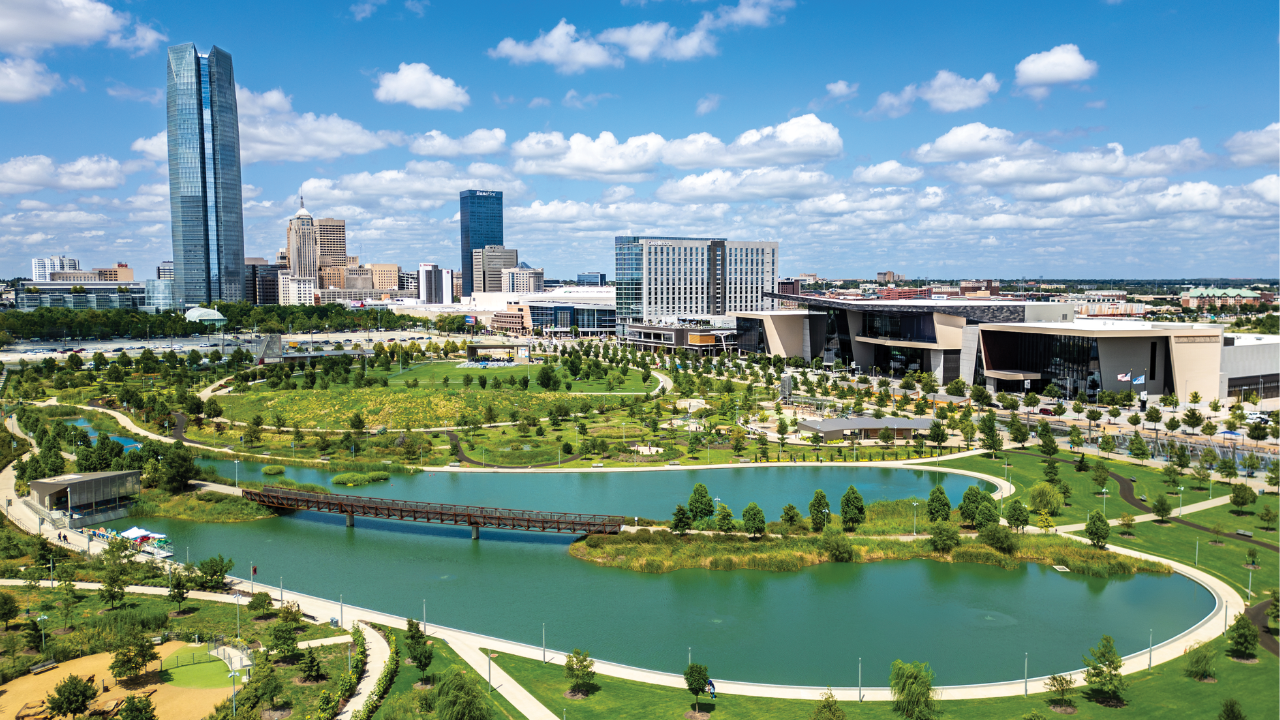
Oklahoma State Guide
Oklahoma is one of the most practical affordability states in the country right now. It does not have the hype of Texas, Florida, Tennessee, or the Carolinas, but the numbers are hard to ignore. Home prices remain far below the national median, the statewide cost of living is low, and families can still find real metro options without automatically taking on a $400,000-plus mortgage.
The state is not perfect. Oklahoma has income tax, hot summers, storm risk, car-dependent cities, and job markets that vary heavily by metro. But for middle-class families who want a realistic house payment, Oklahoma deserves a serious look.
For Paycheck Cities readers, the first Oklahoma question is usually simple: Tulsa or Oklahoma City? Tulsa often gives families the better immediate affordability story. Oklahoma City gives families the larger economy, more growth, and more long-term metro opportunity.
Oklahoma gives families something increasingly rare: two real metro areas with affordable housing, job access, and family suburbs. Tulsa and Oklahoma City are not tiny towns. They have hospitals, universities, airports, professional services, energy employers, aerospace jobs, logistics, and growing suburbs.
The biggest Oklahoma advantage is the monthly payment. The state median sale price and average home value remain far below the national median, which means families can often buy a real house for less than what many buyers elsewhere pay for a starter condo.
Oklahoma is not a no-income-tax state like Texas, Tennessee, or Florida. Starting in 2026, Oklahoma’s top marginal income tax rate is around 4.5%. This table uses a simple top-rate estimate so readers can see the scale before deductions, credits, filing status, and bracket calculations.
| Annual income | Simple OK tax estimate at 4.5% | Extra tax vs Texas | Estimated savings vs California at 9.3% | Estimated savings vs New York at 6.85% |
|---|---|---|---|---|
| $50,000 | ~$2,250/yr | +$2,250/yr | ~$2,400/yr less | ~$1,175/yr less |
| $75,000 | ~$3,375/yr | +$3,375/yr | ~$3,600/yr less | ~$1,763/yr less |
| $100,000 | ~$4,500/yr | +$4,500/yr | ~$4,800/yr less | ~$2,350/yr less |
| $150,000 | ~$6,750/yr | +$6,750/yr | ~$7,200/yr less | ~$3,525/yr less |
Note: These are simplified state-only estimates using Oklahoma’s top-rate comparison. Actual Oklahoma income tax can be lower after deductions, credits, filing status, and bracket calculations. Texas has no state income tax on wages, so the “extra tax vs Texas” column shows what Oklahoma residents may pay that Texas residents generally would not.
Oklahoma’s economy is strongest in Oklahoma City and Tulsa, but the job mix is broader than people assume. The state has anchors in energy, aerospace, healthcare, logistics, government, education, manufacturing, military, and professional services.
| Industry | Key employers or anchors | Typical salary range | Best Oklahoma cities |
|---|---|---|---|
| Aerospace and defense | Tinker AFB, FAA, aerospace suppliers, defense contractors | $50k to $140k | Oklahoma City, Midwest City, Norman, Tulsa |
| Healthcare | OU Health, Saint Francis, Integris, Mercy, Hillcrest, regional hospitals | $42k to $135k | Oklahoma City, Tulsa, Edmond, Norman, Broken Arrow |
| Energy | Oil, natural gas, energy services, engineering, corporate operations | $50k to $150k | Oklahoma City, Tulsa, Edmond |
| Government and public sector | State government, city government, public schools, universities | $38k to $105k | Oklahoma City, Norman, Tulsa, Edmond |
| Logistics and transportation | I-35, I-40, I-44, warehousing, trucking, distribution | $40k to $95k | Oklahoma City, Tulsa, Moore, Yukon |
| Education and universities | OU, OSU-Tulsa, TU, public school districts, community colleges | $35k to $95k | Norman, Tulsa, Oklahoma City, Edmond |
- A middle-class family: Tulsa and OKC can still offer realistic house payments
- A healthcare worker: both major metros have strong hospital and medical systems
- An aerospace or defense worker: Oklahoma City has major aerospace and defense anchors
- A remote worker: lower housing costs can stretch a national salary further
- A family comparing suburbs: Broken Arrow, Bixby, Jenks, Edmond, Yukon, and Norman all deserve research
- A budget-focused homebuyer: Oklahoma still offers payments that are hard to find in many states
- No state income tax: Oklahoma taxes income, unlike Texas, Tennessee, and Florida
- Walkable car-free living: most Oklahoma communities are car-dependent
- Low storm risk: severe weather and tornado risk should be part of your planning
- Coastal-style amenities: Oklahoma is practical, not coastal or resort-like
- Equal school quality everywhere: district and neighborhood research matter
- High salaries in every field: job quality is strongest in specific industries and metros
Oklahoma does not win because it has no income tax. It wins because the housing costs can still be low enough to change the entire monthly budget. Compared with Texas, Tennessee, Georgia, Arkansas, and South Carolina, Oklahoma’s strongest argument is simple: your housing payment may be easier to control.
| State | Income tax | Housing picture | Job market | Best for |
|---|---|---|---|---|
| Oklahoma | Graduated tax, top rate around 4.5% | Very affordable by national standards | Strongest in OKC and Tulsa | Families, aerospace, healthcare, energy, lower payments |
| Texas | None | Wide range, but property taxes can be high | Very strong | Large metros, energy, business, defense, trades |
| Tennessee | None | Still affordable in several mid-size cities | Strong | No income tax, healthcare, manufacturing, music |
| Arkansas | Graduated tax | Very affordable in many cities | Moderate, stronger in regional hubs | Families, retirees, manufacturing, remote workers |
| Georgia | Flat tax | Atlanta suburbs can be pricey, smaller cities still workable | Very strong | Logistics, film, healthcare, Atlanta access |
| South Carolina | Graduated tax | Affordable inland, expensive near Charleston | Moderate to strong | Manufacturing, healthcare, retirees, coastal access |
| City | Housing snapshot | Est. monthly payment | Best for | Watch out for |
|---|---|---|---|---|
| Tulsa | ~$240k median sale | ~$1,575 to $1,775 | Lower payments, easier commutes, strong suburbs | Smaller economy than OKC |
| Oklahoma City | ~$268k median sale | ~$1,755 to $1,955 | Job growth, amenities, long-term upside | More spread out, higher desirable-suburb prices |
| Broken Arrow | Varies by neighborhood | Coming soon | Families, schools, Tulsa-area suburb life | More expensive than older Tulsa neighborhoods |
| Edmond | Premium OKC suburb | Coming soon | Schools, higher-income families, long-term demand | Higher home prices |
| Norman | Wide range | Coming soon | University energy, family neighborhoods, OKC access | Game-day traffic and student-area variation |
| Moore | Middle-market OKC suburb | Coming soon | Commuters, starter homes, family access | Storm risk and neighborhood selection |
Data note: Statewide tax, housing, and cost-of-living references are based on current public data from Tax Foundation, Zillow, Redfin, MERIC-style cost-of-living data, BLS-style labor snapshots, and local market sources. Mortgage estimates assume a conventional purchase with 10% down, a 6.8% interest rate, estimated property taxes, and homeowners insurance. Actual payments vary by credit score, loan type, county, insurance quotes, HOA fees, and current mortgage rates.