
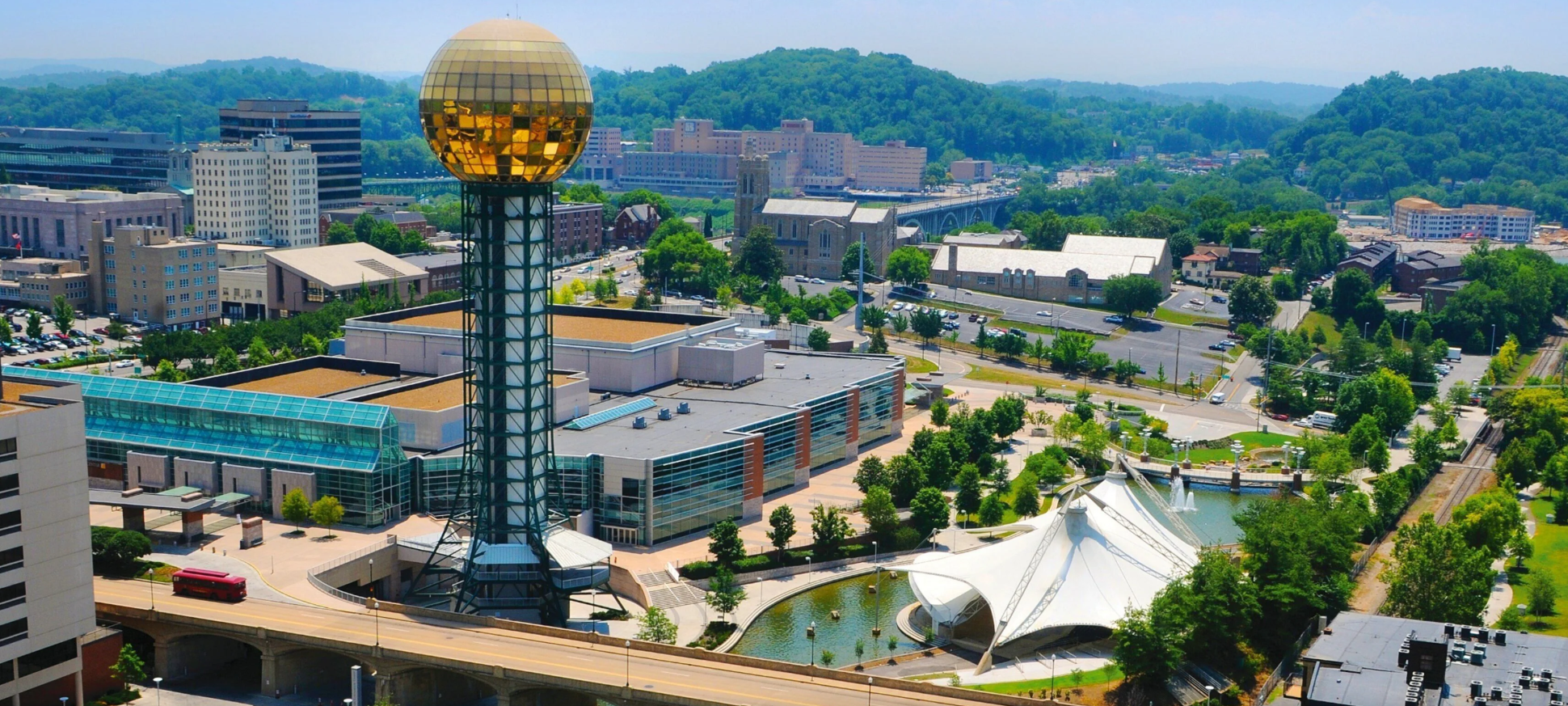
Living in Knoxville Tennessee: What Nobody Tells You Before You Move
Knoxville keeps showing up on affordability lists and it deserves to be there. The job market is solid, the mountains are 45 minutes from your front door, and home prices are still well below what middle-class families are dealing with in Nashville, Atlanta, or pretty much any major Southern city right now.
But there are things people get wrong about Knoxville before they move. Things that don’t make it into the rankings. We dug into the actual 2026 numbers so you can go in with a clear picture of what life here really costs and what you’re getting for it.
01. Housing market: what your money actually buys
The median sale price in Knoxville was $305,000 in March 2026, up a modest 0.3% from the previous year according to Redfin. That puts Knoxville about 27% below the national median and roughly $135,000 less than Nashville. For a household earning $75,000 to $80,000 a year that gap makes the difference between homeownership being possible and being out of reach.
In practical terms, $305,000 in Knoxville gets you a 3-bedroom, 2-bath home with a yard in most neighborhoods. In North Knoxville and South Knoxville you can find solid homes in the $230,000 to $300,000 range. In Farragut and West Knox, where the best schools are, plan on $380,000 to $500,000 for comparable quality.
Renters are looking at an average of $1,761 per month for an apartment. Two-bedroom units average $1,630. If you’re coming from a city where two-bedroom apartments run $2,500 or more, those numbers will feel like a relief.
How competitive is the market right now?
Homes in Knoxville receive about 2 offers on average and sell in around 62 days. That is a very different experience from Charlotte, Austin, or Nashville where buyers routinely lose homes to cash offers within days. You have time to think, tour, and negotiate in Knoxville. That matters a lot for first-time buyers or families relocating from out of state.
| Home type | Median price 2026 | vs. national avg | Days on market |
|---|---|---|---|
| Single family home | $305,000 | 27% below avg | 62 days |
| Condo | $290,000 | 30% below avg | 48 days |
| Avg 2BR apartment | $1,630/mo | 22% below avg | N/A |
| Avg 1BR apartment | $1,393/mo | 24% below avg | N/A |
02. Job market: who is hiring and what they pay
The unemployment rate in Knoxville sits at 3.2% as of late 2025 per the Bureau of Labor Statistics. Total employment across the metro area is around 456,000 people. That is a stable, diverse economy that doesn’t depend on one single industry.
The University of Tennessee is the largest single employer and anchors a substantial healthcare and research community throughout the region. Oak Ridge National Laboratory, 25 miles west of the city, is one of the most important science and energy research facilities in the country and employs thousands of scientists and engineers. Healthcare is the fastest growing sector in the area right now, and registered nurses are the most in-demand job with nearly 700 active postings at any given time.
The median household income in the Knoxville metro is $69,606. That number is below the national median, which is actually good news if you’re relocating with a salary from a higher-cost city. Your income will go noticeably further here than it did back home.
| Industry | Key employers | Typical salary range | Job outlook |
|---|---|---|---|
| Healthcare | UT Medical Center, Covenant Health | $45k to $120k | Very strong |
| Research and science | Oak Ridge National Lab, UT | $65k to $145k | Strong |
| Education | University of Tennessee, Knox Co. Schools | $38k to $75k | Stable |
| Manufacturing | Denso, Regal Rexnord | $42k to $72k | Moderate |
| Retail and logistics | Food City, Amazon | $32k to $55k | Stable |
03. Full cost of living breakdown
Knoxville has the lowest cost of living of any major city in Tennessee, sitting at about 86 on the C2ER index. That means roughly 14% cheaper than the national average across all spending categories. Healthcare costs 20% less here than the national average. Entertainment runs about 11% cheaper. Housing is where the biggest savings show up.
The one thing that catches people off guard is the sales tax. Tennessee funds its state government largely through sales tax rather than income tax, and the combined rate in Knoxville is 9.25%. That applies to groceries, clothing, household goods, all of it. It shows up on every receipt. A family spending $3,000 a month on taxable goods will pay around $3,300 in sales tax over the course of a year. Budget for it upfront rather than being surprised later.
| Category | vs. national average | Monthly est. family of 4 | Grade |
|---|---|---|---|
| Housing | 27% below | ~$1,650 | Excellent |
| Healthcare | 20% below | ~$580 | Excellent |
| Entertainment | 11% below | ~$280 | Good |
| Utilities | 8% below | ~$164 | Good |
| Groceries | 2% below | ~$1,100 | Average |
| Transportation | 3% below | ~$780 | Average |
| Sales tax combined | Above average | 9.25% rate | Watch this |
04. Schools: what families need to know before they buy
Knox County Schools grades out at B+ overall from Niche. That is a solid score but it covers a lot of ground and the quality varies quite a bit depending on which part of the county you’re in.
Farragut is the standout. The Farragut school zone consistently earns A ratings and is one of the highest-performing suburban school systems in Tennessee. Families who make Farragut their priority will pay more for a home, typically $380,000 to $500,000, but the school quality is genuinely exceptional.
North Knoxville and Fountain City are solid B to B+ territory at more affordable prices. South Knoxville and East Knoxville have been improving but still grade out lower on average. The most important thing: always look up the specific school for any home you’re seriously considering. Don’t rely on the district average alone.
| Area | School quality | Home price range | Notes |
|---|---|---|---|
| Farragut and West Knox | A to A− | $380k to $550k | Best schools, higher prices |
| North Knox and Fountain City | B to B+ | $220k to $320k | Good value, improving |
| South Knoxville | B− to B | $210k to $310k | Most affordable, gentrifying |
| Downtown and 4th and Gill | B | $280k to $420k | Urban feel, walkable |
| East Knoxville | B− | $180k to $260k | Most affordable overall |
05. Best neighborhoods for different budgets
06. What daily life actually looks like
The Great Smoky Mountains National Park is 45 minutes from downtown Knoxville. It is the most visited national park in the country and residents treat it like a backyard. Weekend hikes, camping trips, drives up through Gatlinburg — this is a regular part of life here in a way that genuinely sets Knoxville apart from most mid-sized cities.
Market Square downtown has become a real destination. Independent restaurants, craft breweries, live events, and a farmers market run throughout the warmer months. The food scene has improved dramatically over the past five years and continues to grow as more people move to the area.
The average commute in Knoxville is about 21 minutes, which is well below the national average. But the city runs almost entirely on cars. Traffic on I-40 and Kingston Pike during morning and evening rush hour has gotten noticeably worse as the population grows. If you work in Farragut and live downtown, or the other way around, plan for 30 to 45 minutes during peak times. Public transit exists but it is not a realistic option for most daily commuters.
07. The real downsides
- Median home $305k, well below national average
- No state income tax on wages
- Cost of living 14% below the national average
- Great Smoky Mountains 45 minutes away
- 3.2% unemployment, below national average
- Healthcare 20% cheaper than national average
- Real downtown food and culture scene
- Strong and growing remote worker community
- Home prices up over 50% since 2019
- 9.25% combined sales tax, one of the highest in the US
- Almost entirely car dependent
- Hot and humid from June through September
- School quality varies a lot by neighborhood
- Traffic getting worse as the city grows
- Limited direct flights from McGhee Tyson Airport
- Local wages lower than national median
Summers in Knoxville are genuinely hot and humid. June through September regularly see temperatures in the 90s with high humidity. People who move here from the Pacific Northwest, the Midwest, or the Northeast are often caught off guard by how long and heavy the summer feels. It limits outdoor activity for several months of the year and that is worth knowing before you commit to moving.
The airport situation is also worth a mention if you travel for work. McGhee Tyson Airport has a limited number of direct routes. Most trips to major cities require a connection through Atlanta or Charlotte. That adds real time and cost to every work trip you take.